2016
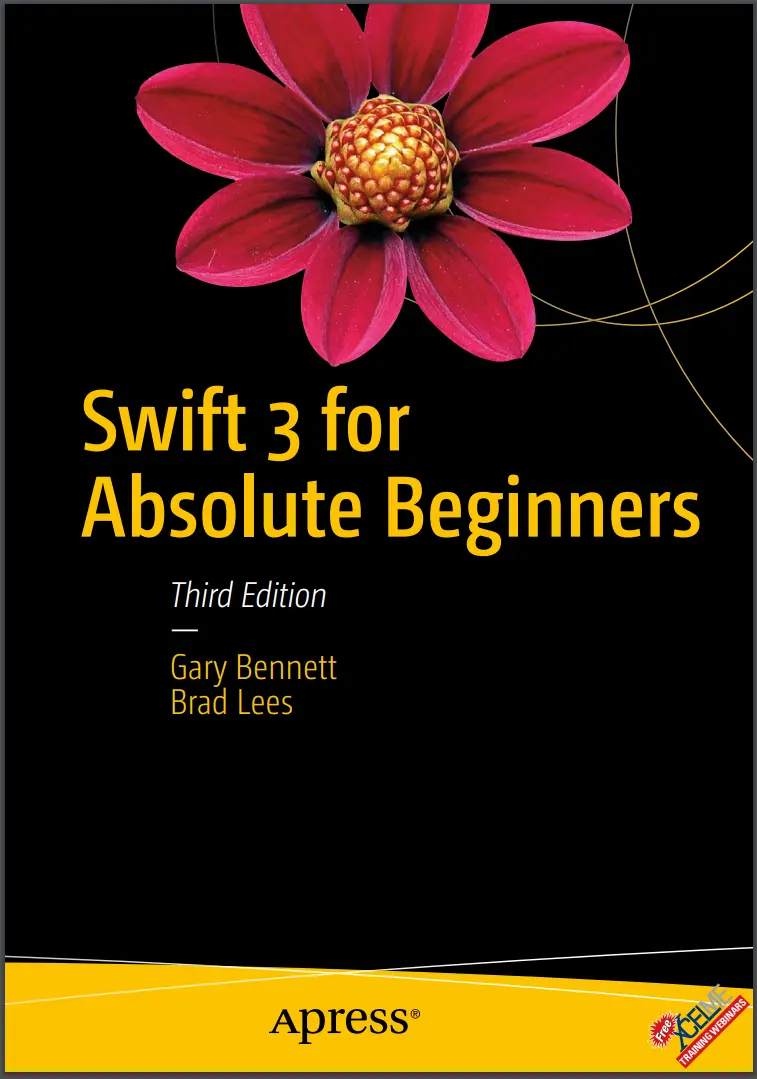
Swift 3 for Absolute Beginners. 3 Ed - Brad Lees, Gary Bennett
Stay motivated and overcome obstacles while learning to use Swift Playgrounds to be a great iOS developer. This book is perfect for those with no programming background, those with some programming experience but no object-oriented experience, or those that have a great idea for an app but haven’t programmed since school, and it is now updated for Swift 3.
Many people have a difficult time believing they can learn to write iOS apps. Swift 3 for Absolute Beginners, along with the free, live online training sessions will show you how to do so. You'll learn Object Oriented Programming and be introduced to HealthKit before moving on to write your own iPhone and Watch apps from scratch.
Gary Bennett and Brad Lees are full-time professional iOS developers and have developed a broad spectrum of apps for Fortune 500 companies. The authors have taken their combined 12 years of writing apps, teaching online iOS courses, the experience from their first three iOS books, along with their online instruction and free online forum at XcelMe.com to create an excellent training book.
What You’ll Learn:
- Work with Swift classes, properties, and functions
- Examine proper user interface and user experience design
- Understand Swift data types: integers, floats, strings, and booleans
- Use Swift data collections: arrays and dictionaries
- Review Boolean logic, comparing data, and flow control
Who This Book Is For
Anyone who wants to learn to develop apps for the Mac, iPhone, and iPad, and Watch using the Swift programming language. No previous programming experience is necessary.
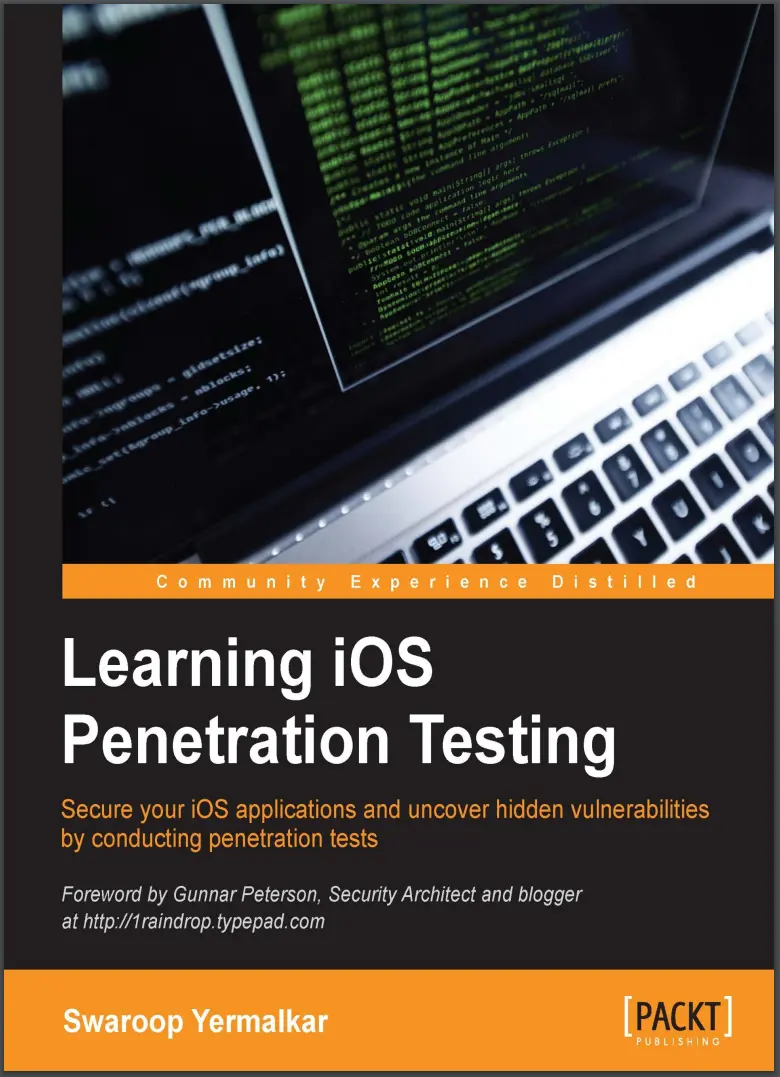
Learning iOS Penetration Testing - Swaroop Yermalkar
This book is for IT security professionals who want to conduct security testing of applications. This book will give you exposure to diverse tools to perform penetration testing. This book will also appeal to iOS developers who would like to secure their applications, as well as security professionals. It is easy to follow for anyone without experience of iOS pentesting.
What You Will Learn
- Understand the basics of iOS app development, deployment, security architecture, application signing, application sandboxing, and OWASP TOP 10 for mobile
- Set up your lab for iOS app pentesting and identify sensitive information stored locally
- Perform traffic analysis of iOS devices and catch sensitive data being leaked by side channels
- Modify an application's behavior using runtime analysis
- Analyze an application's binary for security protection
- Acquire the knowledge required for exploiting iOS devices
- Learn the basics of iOS forensics
In Detail
iOS has become one of the most popular mobile operating systems with more than 1.4 million apps available in the iOS App Store. Some security weaknesses in any of these applications or on the system could mean that an attacker can get access to the device and retrieve sensitive information. This book will show you how to conduct a wide range of penetration tests on iOS devices to uncover vulnerabilities and strengthen the system from attacks.
Learning iOS Penetration Testing discusses the common vulnerabilities and security-related shortcomings in an iOS application and operating system, and will teach you to conduct static and dynamic analysis of iOS applications.
This practical guide will help you uncover vulnerabilities in iOS phones and applications. We begin with basics of iOS security and dig deep to learn about traffic analysis, code analysis, and various other techniques. Later, we discuss the various utilities, and the process of reversing and auditing.
Style and approach
This fast-paced and practical guide takes a step-by-step approach to penetration testing with the goal of helping you secure your iOS devices and apps quickly.
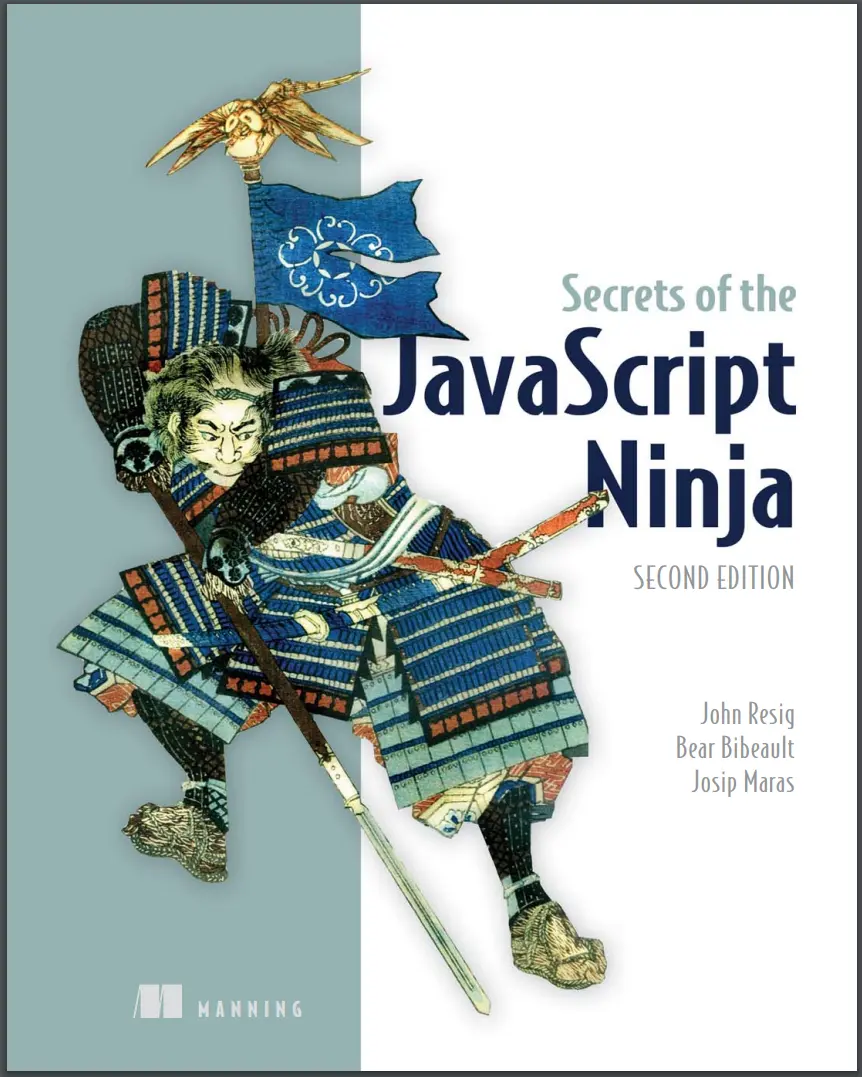
Secrets of the JavaScript Ninja. 2 ed - Bear Bibeault, John Resig, Josip Maras
More than ever, the web is a universal platform for all types of applications, and JavaScript is the language of the web. If you're serious about web development, it's not enough to be a decent JavaScript coder. You need to be ninja-stealthy, efficient, and ready for anything. This book shows you how.
Purchase of the print book includes a free eBook in PDF, Kindle, and ePub formats from Manning Publications.
About the Technology
JavaScript is rapidly becoming a universal language for every type of application, whether on the web, on the desktop, in the cloud, or on mobile devices. When you become a JavaScript pro, you have a powerful skill set that’s usable across all these domains.
About the Book
Secrets of the JavaScript Ninja, Second Edition uses practical examples to clearly illustrate each core concept and technique. This completely revised edition shows you how to master key JavaScript concepts such as functions, closures, objects, prototypes, and promises. It covers APIs such as the DOM, events, and timers. You’ll discover best practice techniques such as testing, and cross-browser development, all taught from the perspective of skilled JavaScript practitioners.
What’s Inside
- Writing more effective code with functions, objects, and closures
- Learning to avoid JavaScript application pitfalls
- Using regular expressions to write succinct text-processing code
- Managing asynchronous code with promises
- Fully revised to cover concepts from ES6 and ES7
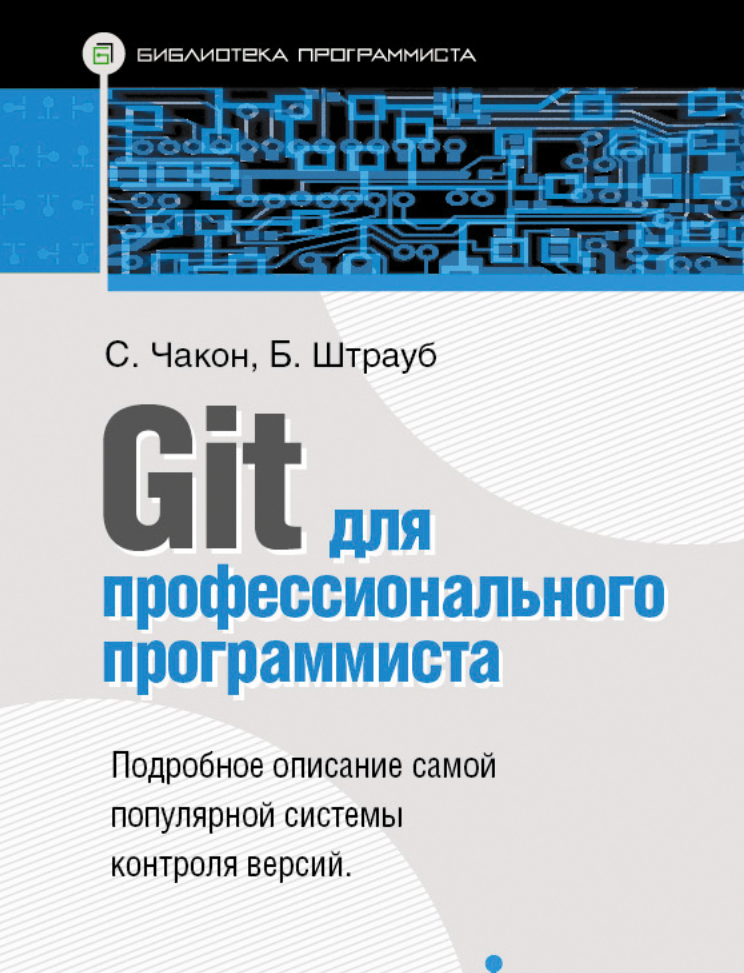
Git для профессионального программиста - Бен Штрауб, Скотт Чакон
Перед вами второе издание книги. Первая версия увидела свет четыре года назад.
Многое изменилось с того времени, хотя наиболее важные вещи остались незыблемыми. Большинство ключевых команд и концепций до сих пор применимы, ведь Git-разработчики прилагают массу усилий для поддержания обратной совместимости, но появились и значительные нововведения и изменения в окружающем систему Git сообществе.
Второе издание книги предусматривает рассказ об этих изменениях и обновлениях, что поможет новым пользователям быстрее войти в курс дела.
На момент написания первой книги система Git была относительно сложной и по сути представляла собой инструмент, ориентированный на опытного разработчика.
В некоторых сообществах она начала набирать популярность, но до повсеместного ее использования, которое мы наблюдаем в наши дни, было далеко. Тем не менее, постепенно эту систему приняли на вооружение практически все сообщества разработчиков ПО с открытым исходным кодом. Появление огромного числа графических интерфейсов для всех платформ и поддержка IDE позволили внедрить Git в операционные системы семейства Windows. В первом издании книги об этом не было и речи. Одной из основных целей нового издания является рассмотрение всех этих новшеств.
/mastering_parallel_programming_wit_H0limnw.jpg)
Mastering Parallel Programming with R - Eilidh Troup, Simon R Chapple, Terence Sloan, Thorsten Forster
This book is for the intermediate to advanced-level R developer who wants to understand how to harness the power of parallel computing to perform long running computations and analyze large quantities of data. You will require a reasonable knowledge and understanding of R programming. You should be a sufficiently capable programmer so that you can read and understand lower-level languages, such as C/C++, and be familiar with the process of code compilation. You may consider yourself to be the new breed of data scientist—a skilled programmer as well as a mathematician.
What you need for this book
To run the code in this book, you will require a multicore modern specification laptop or desktop computer. You will also require a decent bandwidth Internet connection to download R and the various R code libraries from CRAN, the main online repository for R packages.
The examples in this book have largely been developed using RStudio version 0.98.1062, with the 64-bit R version 3.1.0 (CRAN distribution), running on a mid-2014 generation Apple MacBook Pro OS X 10.9.4, with a 2.6 GHz Intel Core i5 processor and 16 GB of memory. However, all of these examples should also work with the latest version of R.
Some of the examples in this book will not be able to run with Microsoft Windows, but they should run without problem on variants of Linux. Each chapter will detail any required additional external libraries or runtime system requirements, and provide you with information on how to access and install them. This book's errata section will highlight any issues discovered post publication.
/building_applications_with_scala_pacheco_2016.jpg)
Building Applications with Scala - Diego Pacheco
Functional programming started in academia and ended up in the IT industry. The Scala language is a multi-paradigm language used by big players and large organizations that helps you get the correct (in the sense of pure functional programming) software and, at the same time, software that is practical and scalable.
Scala has a very rich ecosystem, including Play Framework, Akka, Slick, Gatling, Finable, and more. In this book, we will start right from the basic principles and ideas on functional and ReactiveX programming, and through practical examples, you will learn how to code with the most important frameworks of the Scala ecosystem, such as Play, Akka, and Slick.
You will learn how to bootstrap a Scala application with SBT and Activator, how to build a Play and Akka application step by step, and we cover the theory of how to scale massive Scala applications with cloud and the NetflixOSS stack. This book will help you to go from the basic subjects to the most advanced ones in order to make you a Scala expert.
/professional_scala_bedrytski_2016.jpg)
Professional Scala - Alessandro Lacava, Aliaksandr Bedrytski, Benjamin Neil, Janek Bogucki, Matthew de Detrich
A working knowledge of Scala puts you in demand. As both the language and applications expand, so do the opportunities for experienced Scala programmers—and many positions are going unfi lled. Major enterprises across industries are using Scala every day, in a number of different applications and capacities. Professional Scala helps you update your skills quickly to start advancing your career.
Scala bridges the gap between functional and object-oriented programming, and this book details that link with a clear discussion of both Java compatibility and the read-eval-print loop used in declarative programming. You’ll learn the details of Scala testing, design patterns, concurrency, and much more as you build the in-demand skill set required to utilize Scala in a real-world production environment.
/programming_in_lua_4_ed_ierusalimschy_2016.jpg)
Programming in Lua. 4 Ed - Roberto Ierusalimschy
This book does not assume any prior knowledge of Lua or any specific programming language —except for its last part, which discusses the Lua API with C. However, it assumes the knowledge of some basic programming concepts, in particular variables and assignment, control structures, functions and parameters, recursion, streams and files, and basic data structures.
Lua users typically fall into three broad groups: those that use Lua already embedded in an application program, those that use Lua stand alone, and those that use Lua and C together. This book has much to offer to all these groups.
Many people use Lua embedded in an application program, such as Adobe Lightroom, Nmap, or World of Warcraft. These applications use Lua's C API to register new functions, to create new types, and to change the behavior of some language operations, configuring Lua for their specific domains. Often, the users of such applications do not even know that Lua is an independent language adapted for a particular domain. For instance, many developers of plug-ins for Lightroom do not know about other uses of the language; Nmap users tend to think of Lua as the language of the Nmap Scripting Engine; many players of World of Warcraft regard Lua as a language exclusive to that game. Despite these different worlds, the core language is still the same, and the programming techniques you will learn here apply everywhere.
Lua is useful also as a stand-alone language, not only for text processing and one-shot little programs, but for medium-to-large projects, too. For such uses, the main functionality of Lua comes from libraries. The standard libraries, for instance, offer pattern matching and other functions for string handling. As Lua has improved its support for libraries, there has been a proliferation of external packages. LuaRocks, a deployment and management system for Lua modules, passed one thousand modules in 2015, covering all sorts of domains.
Finally, there are those programmers that work on the other side of the bench, writing applications that use Lua as a C library. Those people will program more in C than in Lua, although they need a good understanding of Lua to create interfaces that are simple, easy to use, and well integrated with the language.
/unreal_engine_4_scripting_wit_xysCdxw.jpg)
Unreal Engine 4 Scripting with C++ Cookbook - Stephen Whittle, William Sherif
Unreal Engine 4 (UE4) is a complete suite of game development tools made by game developers for game developers. With more than 80 practical recipes, this book is a guide that showcases techniques to use the power of C++ scripting while developing games with UE4. We will start by adding and editing C++ classes from within the Unreal Editor. Then we will delve into one of Unreal's primary strengths—the ability for designers to customize programmer-developed actors and components. This will help you understand the benefits of when and how to use C++ as a scripting tool. With a blend of task-oriented recipes, this book will provide actionable information about scripting games with UE4 and manipulating the game and the development environment using C++. Toward the end of this book, you will be empowered to become a top-notch developer with UE4 using C++ as the scripting language.
/izuchaem_ruby_makgavren_2016.jpg)
Изучаем Ruby - Джей Макгаврен
Вам интересно, почему буквально все вокруг заговорили о языке Ruby? Спросите себя прямо: вам нравится работать эффективно? Неужели многочисленные компиляторы, библиотеки, классы, которыми грузят вас другие языки программирования, приближают вас к решению конкретной задачи, восхищению коллег и толпе счастливых заказчиков? Вы хотите, чтобы язык программирования занимался техническими подробностями вместо вас? Тогда бросайте рутинную работу и приступайте к решению конкретных задач, а язык Ruby сделает за вас все остальное.
Как и все книги серии Head First, книга «Изучаем Ruby» использует активный подход к обучению, выходя за рамки сухих, абстрактных объяснений и справочников. Вас не только научат языку Ruby, но и помогут вашей программистской звезде ярко воссиять на небосклоне. Вы освоите основы языка и продвинутые возможности Ruby, такие как блоки, объекты, методы, классы и регулярные выражения. С улучшением ваших навыков задачи будут усложняться, и вы перейдете к таким темам, как обработка исключений, модули, подмешанные классы и метапрограммирование.
/scala_for_data_science_bugnion_2016.jpg)
Scala for Data Science - Pascal Bugnion
Data science is fashionable. Data science startups are sprouting across the globe and established companies are scrambling to assemble data science teams. The ability to analyze large datasets is also becoming increasingly important in the academic and research world.
Why this explosion in demand for data scientists? Our view is that the emergence of data science can be viewed as the serendipitous collusion of several interlinked factors. The first is data availability. Over the last fifteen years, the amount of data collected by companies has exploded. In the world of research, cheap gene sequencing techniques have drastically increased the amount of genomic data available. Social and professional networking sites have built huge graphs interlinking a significant fraction of the people living on the planet. At the same time, the development of the World Wide Web makes accessing this wealth of data possible from almost anywhere in the world.
The increased availability of data has resulted in an increase in data awareness. It is no longer acceptable for decision makers to trust their experience and "gut feeling" alone. Increasingly, one expects business decisions to be driven by data.
Finally, the tools for efficiently making sense of and extracting insights from huge data sets are starting to mature: one doesn't need to be an expert in distributed computing to analyze a large data set any more. Apache Spark, for instance, greatly eases writing distributed data analysis applications. The explosion of cloud infrastructure facilitates scaling computing needs to cope with variable data amounts.
Scala is a popular language for data science. By emphasizing immutability and functional constructs, Scala lends itself well to the construction of robust libraries for concurrency and big data analysis. A rich ecosystem of tools for data science has therefore developed around Scala, including libraries for accessing SQL and NoSQL databases, frameworks for building distributed applications like Apache Spark and libraries for linear algebra and numerical algorithms. We will explore this rich and growing ecosystem in the fourteen chapters of this book.
/applied_text_analysis_with_python_ben_37D0pgc.jpg)
Applied Text Analysis with Python - Benjamin Bengfort, Dr. Rebecca Bilbro, Tony Ojeda
As we explored the architecture of language in the previous chapter, we began to see that it is possible to model natural language in spite of its complexity and flexibility. And yet, the best language models are often highly constrained and applicationspecific. Why is it that models trained in a specific field or domain of the language would perform better than ones trained on general language? Consider that the term “bank” is very likely to be an institution that produces fiscal and monetary tools in an economics, financial, or political domain, whereas in an aviation or vehicular domain it is more likely to be a form of motion that results in the change of direction of an aircraft. By fitting models in a narrower context, the prediction space is smaller and more specific, and therefore better able to handle the flexible aspects of language.
The bulk of our work in the subsequent chapters will be in “feature extraction” and “knowledge engineering” - where we’ll be concerned with the identification of unique vocabulary words, sets of synonyms, interrelationships between entities, and seman‐ tic contexts. However, all of these techniques will revolve around a central text data‐ set: the corpus.
Corpora are collections of related documents that contain natural language. A corpus can be large or small, though generally they consist of hundreds of gigabytes of data inside of thousands of documents. For instance, considering that the average email inbox is 2GB, a moderately sized company of 200 employees would have around a half-terabyte email corpus. Documents contained by a corpus can also vary in size, from tweets to books. Corpora can be annotated, meaning that the text or documents are labeled with the correct responses for supervised learning algorithms, or unanno‐ tated, making them candidates for topic modeling and document clustering.
Naturally the next question should then be “how do we construct a dataset with which to build a language model?” In order to equip you for the rest of the book, this chapter will explore the preliminaries of construction and organization of a domainspecific corpus. Working with text data is substantially different from working with purely numeric data, and there are a number of unique considerations that we will need to take. Whether it is done via scraping, RSS ingestion, or an API, ingesting a raw text corpus in a form that will support the construction of a data product is no trivial task. Moreover, when dealing with a text corpus, we must consider not only how the data is acquired, but also how it is organized on disk. Since these will be very large, often unpredictable datasets, we will need to anticipate potential performance problems and ensure memory safety through streaming data loading and multiproc‐ essing. Finally, we must establish a systematic preprocessing method to transform our raw ingested text into a corpus that is ready for computation and modeling. By the end of this chapter, you should be able to organize your data and establish a reader that knows how to access the text on disk and present it in a standardized fashion for downstream analyses.
/yazyk_programmirovaniya_go_donovan_2016.jpg)
Язык программирования Go - Алан А. А. Донован, Брайан Керниган
Вы краем уха слышали о новом языке программирования Go, но не знаете, что он представляет собой на самом деле? Ответы на все ваши вопросы вы получите в этой книге. Она поможет вам познакомиться с языком Go поближе, узнать о его предназначении и преимуществах, и о том, как писать программы на этом языке (причем это будут программы не начинающего, но профессионального программиста - эффективные и идеоматичные).
Книга написана двумя профессионалами - как в области программирования, так и в области написания книг на программистские темы. Так что если вы хотите быть в курсе последних достижений в программировании - не сомневайтесь, взяв эту книгу, вы свернули на верный путь к профессиональному овладению языком Go.
/java_ee_patterny_proek_MPb6BC8.jpg)
Java EE. Паттерны проектирования для профессионалов - Алекс Фидом, Мурат Йенер
Кннга «Java ЕЕ. Паттерны проектирования для профессионалов» - незаменимый ресурс для всех, кто желает более эффективно работать с Java ЕЕ, а также единственная книга, в которой рассмотрены как теория, так и практикака использования паттернов проектирования на примерах реальных прикладных задач.
Авторы знакомят читателя и с фундаментальными, и с наиболее передовыми возможностями Java EE 7, досконально рассматривают каждый из паттернов и демонстрируют, как эти паттерны применяются при решении повседневных прикладных задач.
/java_deep_learning_essentials_sugomori_2016.jpg)
Java Deep Learning Essentials - Yusuke Sugomori
With an increasing interest in AI around the world, deep learning has attracted a great deal of public attention. Every day, deep learning algorithms are used across different industries. Deep learning has provided a revolutionary step to actualize AI. While it is a revolutionary technique, deep learning is often thought to be complicated, and so it is often kept from much being known of its contents. Theories and concepts based on deep learning are not complex or difficult. In this book, we'll take a step-by-step approach to learn theories and equations for the correct understanding of deep learning. You will find implementations from scratch, with detailed explanations of the cautionary notes for practical use cases.
What you need for this book?
We'll implement deep learning algorithms using Lambda Expressions, hence Java 8 or above is required. Also, we'll use the Java library DeepLearning4J 0.4 or above.
Who this book is for?
This book is for Java developers who want to know about deep learning algorithms and wish to implement them in applications.
Since this book covers the core concepts of and approaches to both machine learning and deep learning, no previous experience in machine learning is required.
Also, we will implement deep learning algorithms with very simple codes, so elementary Java developers will also find this book useful for developing both their Java skills and deep learning skills.
/ruby_recipes_mandal_2016.jpg)
Ruby Recipes - Malay Mandal
Solve your Ruby programming problems that occur during your day-to-day scripting work. This book contains a varied selection of practical and interesting code recipes designed to make your coding life easier. Ruby Recipes includes solutions to problems in working with data, handling exceptions, writing blocks, and using regular expressions.
This book provides ready scripts for both simple complex scripting tasks, which you can use readily or with only minor modifications. These scripts cover areas such as collections, classes and structures, functional programming, and log handling. With these handy recipes at your fingertips, you will be able to solve those niggling problems and become even more efficient.
What You Will Learn:
- Install and run Ruby
- Read and write data
- Write functions
- Work with arrays, ranges, hashes, and iterators
- Handle dates and time
- Process XML as text
- Master OOP concepts such as classes, objects, subclassing, and inheritance
- Connect to databases
Who This Book Is For
Programmers new to Ruby, and web developers interested in knowing the foundations of the language.
/unity_v_dejstvii_hoking_2016.jpg)
Unity в действии - Джозеф Хокинг
Unity зачастую представляют как набор компонентов, не требующих программирования, что в корне неверно. Для создания успешной игры необходимо многое: великолепная работа художника, программистские навыки, интересная история, увлекательный геймплей и дружная и слаженная работа команды разработчиков. А еще нельзя забывать про безупречную визуализацию и качественную работу на всех платформах — от игровых консолей до мобильных телефонов. Unity объединяет мощный движок, возможности профессионального программирования и творчества дизайнеров, позволяя воплотить в жизнь самые невероятные и амбициозные проекты.
Осваивайте Unity и быстрее приступайте к созданию собственных игр!
/delphi_cookbook_2_ed_teti_2016.jpg)
Delphi Cookbook. 2 ed - Daniele Teti
What you need for this book
This book talks about Delphi, so you need it. Not all the recipes are available in all the Delphi editions. Typically, the mobile projects can be compiled only if you have Delphi Enterprise or higher (or Delphi Professional plus the mobile add-on, or RAD Studio professional or higher). All the projects are compiled and tested with the latest Delphi version at the time of writing, but many recipes can be compiled also on older versions.
If you want to run the mobile app on a phone or a tablet, you could use the Android emulator or the iOS simulator, but we strongly suggest an actual device to see how the app really behaves. To deploy an iOS app on your device, you also need an Apple computer with MacOSX.
Who this book is for
This book aims to help the professional Delphi developers in their day-to-day job. This book will teach you about the newest Delphi technologies and its hidden gems. It is not a book for a newbie, but the practical approach will help you reach a new level with your Delphi skills. The experienced developer can benefit from this book because nontrivial problems are solved using best practices. Where more than one way is available or the topic is too broad to be explained in the available pages, references are provided to allow you to go deeper in that field. It is a book to have on your desk for the next few years.
/vvedenie_v_stati_zkW3P7k.jpg)
Введение в статистическое обучение с примерами на языке R - Гарет Джеймс, Даниела Уиттон, Роберт Тибширани, Тревор Хастингс
Книга представляет собой доступно изложенное введение в статистическое обучение - незаменимый набор инструментов, позволяющих извлечь полезную информацию из больших и сложных наборов данных, которые начали возникать в последние 20 лет в таких областях, как биология, экономика, маркетинг, физика и др. В этой книге описаны одни из наиболее важных методов моделирования и прогнозирования, а также примеры их практического применения. Рассмотренные темы включают линейную регрессию, классификацию, создание повторных выборок, регуляризацию, деревья решений, машины опорных векторов, кластеризацию и др. Описание этих методов сопровождается многочисленными иллюстрациями и практическими примерами. Поскольку цель этого учебника заключается в продвижении методов статистического обучения среди практикующих академических исследователей и промышленных аналитиков, каждая глава включает примеры практической реализации соответствующих методов с помощью R - чрезвычайно популярной среды статистических вычислений с открытым кодом.
Издание рассчитано на неспециалистов, которые хотели бы применять современные методы статистического обучения для анализа своих данных. Предполагается, что читатели ранее прослушали лишь курс по линейной регрессии и не обладают знаниями матричной алгебры.
/java_lambdas_and_parallel_streams_muller_2016.jpg)
Java Lambdas and Parallel Streams - Michael Müller
Some of the new features introduced in Java 8, such as the new Date and Time API (application program interfaces), feel quite familiar and can be used immediately by an experienced Java developer. But some of the most important enhancements, including Lambdas and Streams, require the developer to learn some new concepts. Lambda statements in particular introduce a syntax that is quite unusual for object-oriented programmers. These language constructs are known only to developers who used functional programming languages or enhancements like Microsoft’s Linq (Language Integrated Query). This special syntax takes some getting used to, and some developers may even be a little frightened at first glance. However, these enhancements are extremely powerful, and it is certainly worth taking the time to understand how they can help you to write code that is not only concise but also faster to write and more reusable.
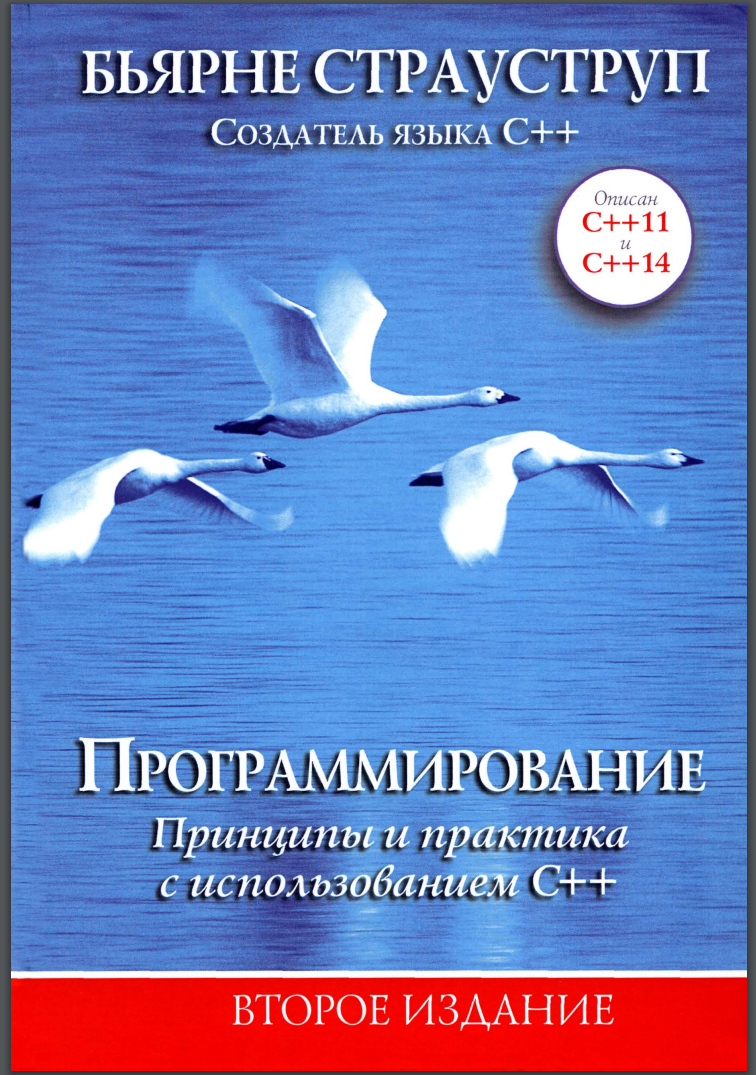
Программирование. Принципы и практика с использованием C++ - Бьёрн Страуструп
Эта книга не является учебником по языку C++, это учебник по программированию. Несмотря на то что ее автор — автор языка С++, книга не посвящена этому языку программирования; он играет в книге сугубо иллюстративную роль. Автор задумал данную книгу как вводный курс по программированию. Поскольку теория без практики совершенно бессмысленна, такой учебник должен изобиловать примерами программных решений, и неудивительно, что автор языка C++ использовал в книге свое детище.
В книге в первую очередь описан широкий круг понятий и приемов программирования, необходимых для того, чтобы стать профессиональным программистом, и в гораздо меньшей степени — возможности языка программирования C++.
В первую очередь, книга адресована начинающим программистам и студентам компьютерных специальностей, которые найдут в ней много новой информации, и смогут узнать точку зрения создателя языка С++ на современные методы программирования.
Если вы решили стать программистом, и уже знакомы с азами C++ — эта книга для вас, в первую очередь потому, что программирование — это не только, и не столько знание инструмента (языка программирования C++), сколько понимание самого процесса. Автор недаром не ограничился своим первоклассным (но ни в коей мере не являющимся учебником для программистов без большого практического опыта) трудом Язык программирования C++.
Проводя грубую аналогию — виртуозное владение топором никого не делало настоящим плотником. Бьярне Страуструп в очередной раз приходит на помощь программистам — создав уникальный язык программирования, он не ограничивается им и рассказывает о том, как правильно им воспользоваться, даже не зная все его тонкости и возможности.
/interactive_object_orien_SlLvBse.jpg)
Interactive Object Oriented Programming in Java - Vaskaran Sarcar
Discover object oriented programming with Java in this unique tutorial. This book uses Java and Eclipse to write and generate output for examples in topics such as classes, interfaces, overloading, and overriding. Interactive Object Oriented Programming in Java uniquely presents its material in a dialogue with the reader to encourage thinking and experimentation.
Later chapters cover further Java programming concepts, such as abstract classes, packages, and exception handling. At each stage you’ll be challenged by the author to help you absorb the information and become a proficient Java programmer. Additionally, each chapter contains simple assignments to encourage you and boost your confidence level.
What You Will Learn?
● Become proficient in object oriented programming
● Test your skills in the basics of Java
● Develop as a Java programmer
● Use the Eclipse IDE to write your code
Who This Book Is For?
Software developers and software testers.
/izuchaem_c_cherez_programmirovanie_5grj4bi.jpg)
Изучаем С++ через программирование игр - Майкл Доусон
Если вы хотите научиться программировать первоклассные игры, вам просто необходимо изучить язык С++. Эта книга поможет вам освоить разработку игр с самых азов, независимо от того, есть ли у вас опыт программирования. Гораздо интересней учиться, когда обучение превращается в игру.
Каждая глава книги описывает самостоятельный игровой проект. В заключительной главе вам предстоит написать сложную игру, которая объединяет все приемы программирования, рассмотренные в предыдущих главах.
Книга, которую вы держите в руках, идеально подойдет для начинающего программиста, планирующего не только как следует освоить непростой язык С++, но и поупражняться в программировании игр.
/building_apis_with_node_js_pereira_2016.jpg)
Building APIs with Node.js - Caio Ribeiro Pereira
This book is intended for developers who have at least a basic knowledge of JavaScript and, especially, those who understand object-oriented programming (OOP), a little bit of client-server architecture, and those with an understanding of the main characteristics of REST APIs.
Mastering these concepts, or at minimum a basic knowledge of them, is essential to fully understand this book.
All the code in this book is written using the latest JavaScript implementation, the ECMAScript 2015 (also called ECMAScript 6, or ES6).