2014
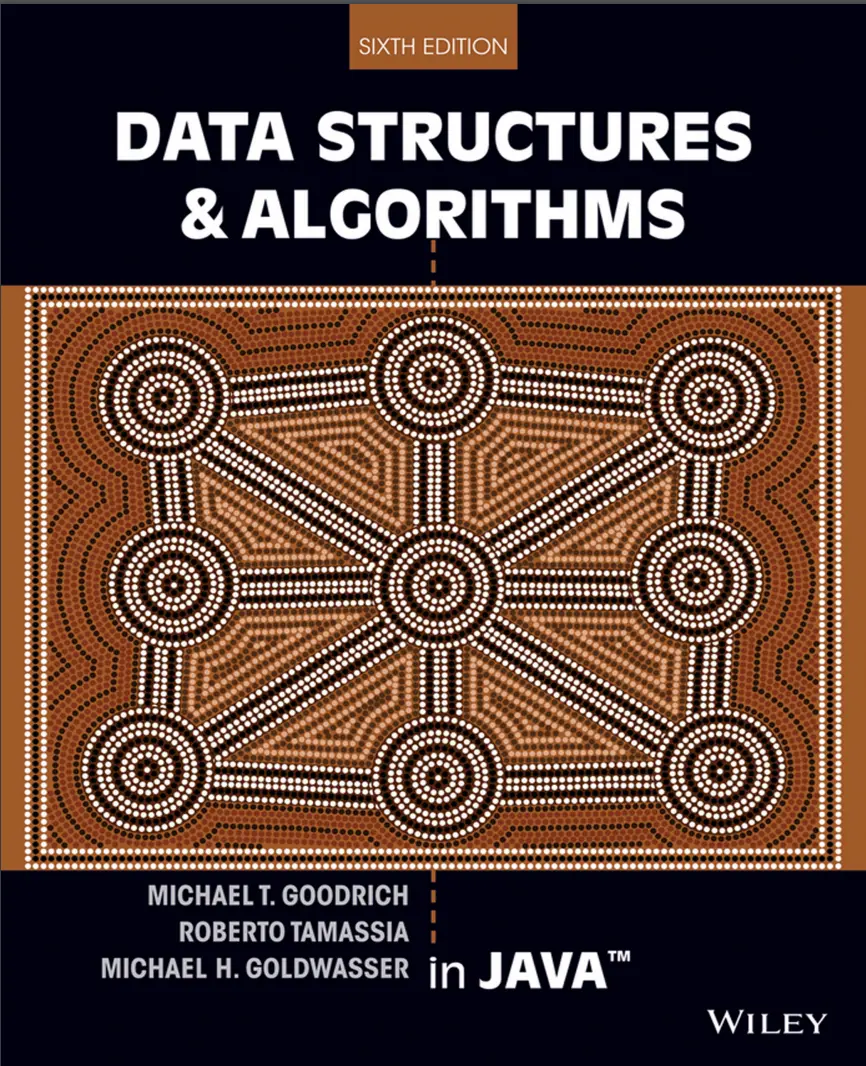
Data Structures and Algorithms in Java. 6 Ed - Michael H. Goldwasser, Michael T. Goodrich, Roberto Tamassia
The design and analysis of efficient data structures has long been recognized as a key component of the Computer Science curriculum. Goodrich, Tomassia and Goldwasser's approach to this classic topic is based on the object-oriented paradigm as the framework of choice for the design of data structures. For each ADT presented in the text, the authors provide an associated Java interface. Concrete data structures realizing the ADTs are provided as Java classes implementing the interfaces. The Java code implementing fundamental data structures in this book is organized in a single Java package, net.datastructures. This package forms a coherent library of data structures and algorithms in Java specifically designed for educational purposes in a way that is complimentary with the Java Collections Framework.
/assembly_language_for_x86_proc_wXgjFZA.jpg)
Assembly Language for x86 Processors. 7 Ed - Kip R. Irvine
Assembly Language for x86 Processors, 7e is suitable for undergraduate courses in assembly language programming and introductory courses in computer systems and computer architecture. Proficiency in one other programming language, preferably Java, C, or C++, is recommended.
Written specifically for 32- and 64-bit Intel/Windows platform, this complete and fully updated study of assembly language teaches students to write and debug programs at the machine level. This text simplifies and demystifies concepts that students need to grasp before they can go on to more advanced computer architecture and operating systems courses. Students put theory into practice through writing software at the machine level, creating a memorable experience that gives them the confidence to work in any OS/machine-oriented environment.
/jquery_2_0_development_cookbook_revill_2014.jpg)
JQuery 2.0 Development Cookbook - Leon Revill
What you need for this book
For all the recipes in this book, you will require an IDE to write JavaScript, HTML, and CSS code, and a web browser to execute your code. For some of the more advanced recipes in this book, you will require a web server running MySQL and PHP.
Who this book is for
This book is for anyone who is either new to jQuery and looking to learn some basics, or familiar with jQuery and looking to expand their knowledge and create some advanced components for their website or web application. This book is an excellent resource for web developers of all skill and experience levels.
/beginning_cobol_for_programmers_coughlan_2014.jpg)
Beginning COBOL for Programmers - Michael Coughlan
When, in 1975, Edsger Dijkstra made his comment that “The use of COBOL cripples the mind; its teaching should, therefore, be regarded as a criminal offence,1 ” he gave voice to, and solidified, the opposition to COBOL in academia. That opposition has resulted in fewer and fewer academic institutions teaching COBOL so that now it has become difficult to find young programmers to replace the aging COBOL workforce.2-3 This scarcity is leading to an impending COBOL crisis. Despite Dijkstra’s comments and the claims regarding COBOL’s imminent death, COBOL remains a dominant force in the world of enterprise computing, and attempts to replace legacy COBOL systems have been shown to be difficult, dangerous, and expensive.
In this chapter, I discuss some of the reasons for COBOL’s longevity. You’re introduced to the notion of an application domain and shown the suitability of COBOL for its target domain. COBOL is one of the oldest computer languages, and the chapter gives a brief history of the language and its four official versions. Later, the chapter presents the evidence for COBOL’s dominance in enterprise computing and discusses the enigma of its relatively low profile.
An obvious solution to the scarcity of COBOL programmers is to replace COBOL with a more fashionable programming language. This chapter exposes the problems with this approach and reveals the benefits of retaining, renovating, and migrating the COBOL code.
Finally, I discuss why learning COBOL and having COBOL on your résumé could be useful additions to your armory in an increasingly competitive job market.